Sunday 20 May 2012

Special ribbons


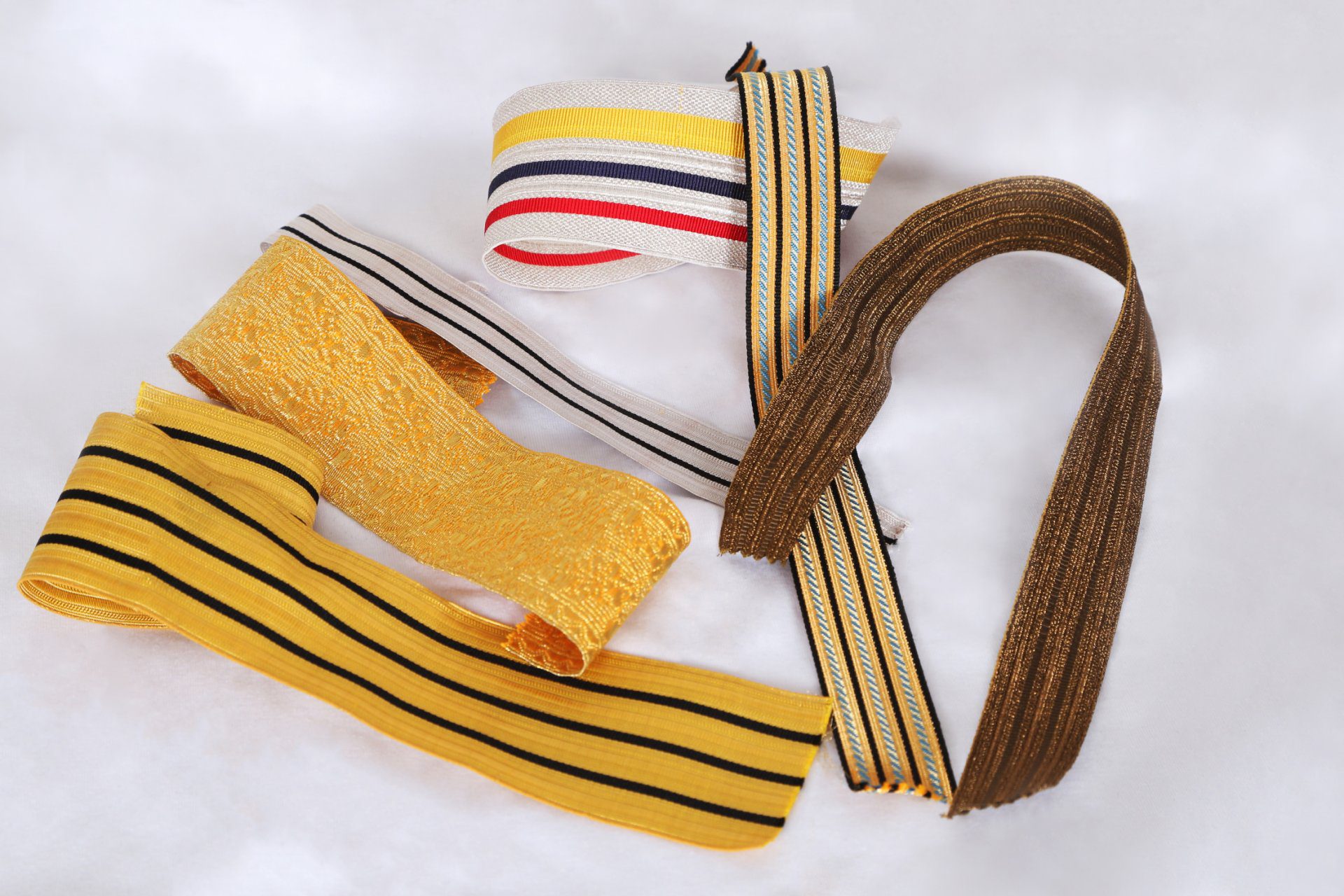
Precious braidsThese special ribbons are highly regarded for the exclusive quality of the thread used, very difficult to weave but unique in elegance and refinement.

  • Silk thread – Silk absorbs dyes more brilliantly than all other fibers, and is truly the aristocrat of specialty threads. It combines the strength (but not abrasiveness) of polyester and the stability of cotton, and sews smoothly without breaking. It has a distinct sheen unmatched by any other thread. Silk threads are available in a wide range of sizes, but the 30 to 50 wts. are the most appropriate for machine embroidery. They are more costly and not as readily available, but well worth considering, especially for embroidering on luxurious fabrics.
  • Metallic and mylar embroidery threads – Metallic threads are manufactured with a center core that is wrapped with metal foil or thin slivers of metal foil. Color is then applied by adding a polyester film to the foil. The most durable and desirable metallic threads have a coating of rice paper pasted over the center core, which binds the core to the metal, preventing the metal from being stripped away. In some threads, the foil may be coated with a silver alloy for added strength, and sometimes the polyester film is applied as an undercoating rather than a topcoating, to keep the color from flaking off. Considering the complexities of manufacturing metallic threads, it’s understandable that some might perform better than others. In fact, no words evoke as much emotion from machine embroiderers as metallic threads. Sewers either love the results these threads provide, or cringe at the thought of using them because they require a little kid-glove treatment, which I’ll discuss in a moment. Experiment to find the metallics that are the most trouble-free in your machine, and you will find they’re well worth using.
  • Glittery mylar threads – Glittery mylar threads are made from plies of film layered together, then cut into slices to form a flat filament thread. As with metallics, various aspects of the manufacturing process – for example, the number of plies used, amount of elongation or stretch inherent in the raw material, and width of the film slice—affect thread quality. These threads are manufactured to be much stronger than they originally were.

Work process

(Click on the image to enlarge it)

Some products

(Click on the image to enlarge it)


© Seab s.r.l. 2007 - 2012| News (RSS)| P. Iva 00903940476

Technical assistance| Credits ilmente